








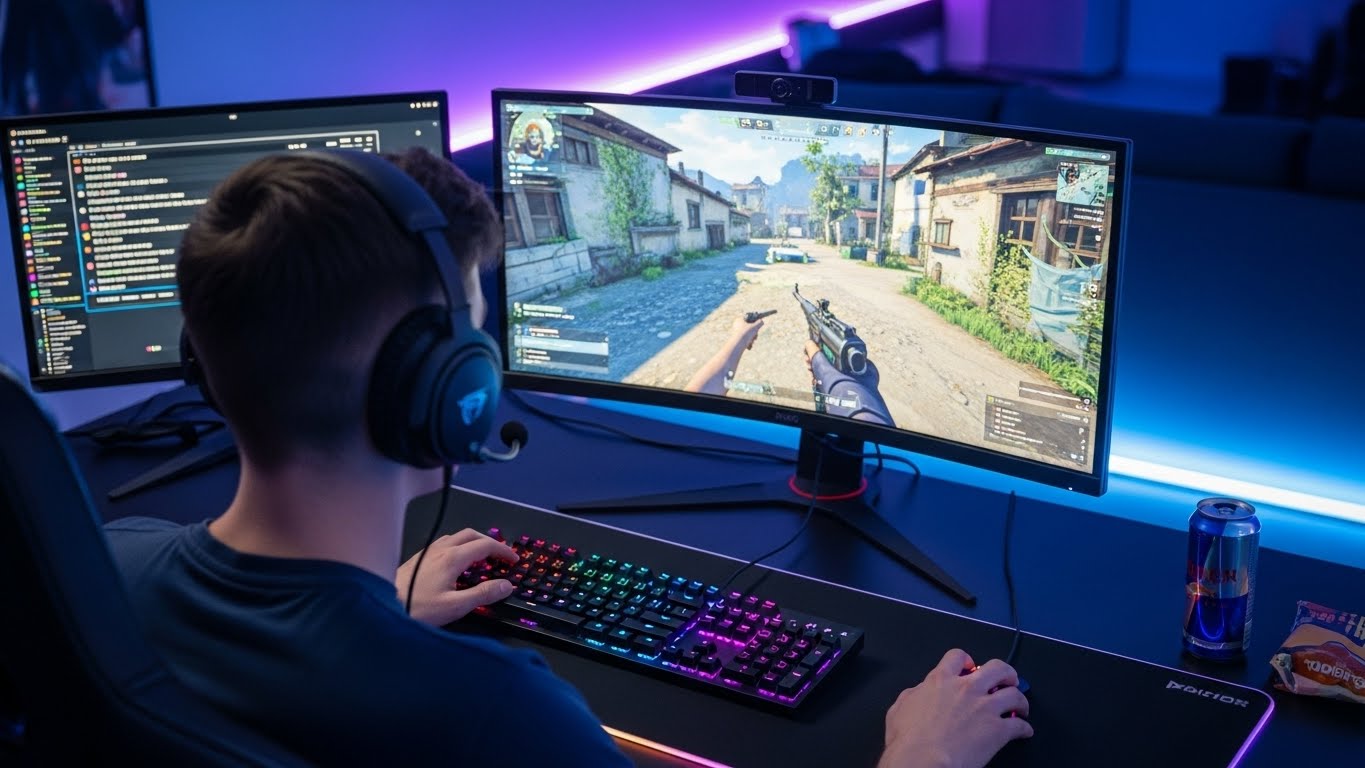
Online sbobet88 has become a significant part of everyday digital culture. Millions of people use internet-connected devices to play games, participate in competitions, explore virtual environments, and interact with other players. The industry now covers everything from quick mobile games to complex multiplayer experiences that can remain active for many years.
This transformation has changed not only how games are played but also how they are created, marketed, and consumed. Players can discover new titles through livestreams, purchase digital content instantly, and receive new features without downloading an entirely new game.
From Local Multiplayer to Global Play
Early multiplayer gaming was often limited by hardware and network availability. Players might need to be in the same room or connected to a local network to compete.
Internet-based gaming removed many of these restrictions. A player can now join a match with people from different countries within seconds. Servers handle connections between participants, while matchmaking systems attempt to create suitable games.
This global structure has made location much less important in determining who can play together.
Choosing the Right Gaming Experience
Different players look for different things from online games. Some want intense competition, while others prefer exploration or creativity.
Action games often focus on quick decisions and precise controls. Role-playing titles emphasize character development and storytelling. Strategy games require planning, while simulation games allow players to experiment with realistic or fictional systems.
There are also games designed specifically for short sessions, making them suitable for people who only have a few minutes available.
Why Progression Matters
Many online games use progression systems to encourage continued participation. Players may earn experience points, unlock abilities, collect equipment, or gain access to new areas.
A well-designed progression system gives players meaningful goals without making advancement feel repetitive. Developers must carefully balance rewards so that experienced players remain interested while newcomers can still catch up.
Seasonal progression systems have also become common. These introduce limited-time challenges and rewards that encourage players to return during particular periods.
The Importance of Fair Competition
Fairness is particularly important in competitive online games. Players expect their success to depend primarily on skill, strategy, and teamwork.
Developers therefore work to identify cheating, exploits, and unfair advantages. Anti-cheat software can detect suspicious behavior, while reporting systems allow communities to flag problematic accounts.
Game balance is another ongoing challenge. A character, weapon, or strategy that is too powerful can dominate matches, so developers frequently adjust game mechanics.
Communication During Matches
Communication can make a major difference in team-based games. Players may need to share information, coordinate movements, assign responsibilities, or react to unexpected situations.
Voice communication is especially useful in fast-paced matches, where typing messages may not be practical.
However, communication systems can also expose players to unwanted behavior. Effective moderation tools allow users to mute, block, or report people who violate community rules.
The Growth of Cross-Platform Gaming
Cross-platform gaming has become increasingly valuable as players use different devices. A person playing on a computer may want to compete with a friend using a console or mobile device.
Supporting multiple platforms can increase a game’s potential audience. It can also create technical challenges because different devices have different hardware capabilities and control methods.
When implemented effectively, cross-platform support can make online communities larger and easier to maintain.
User-Generated Content
Some modern games give players tools to create their own experiences. Users can design maps, characters, challenges, buildings, or other digital objects.
This approach changes players from passive consumers into contributors. A successful community can generate thousands of ideas that developers alone might never have created.
User-generated content can also extend the lifespan of a game by constantly providing new things to discover.
The Changing Role of Game Developers
Developers of online games often have responsibilities that continue long after launch. They must maintain servers, fix technical problems, monitor player feedback, address security concerns, and release new content.
This makes online game development different from creating a traditional single-player title.
Community feedback can influence future updates. Developers may change mechanics, introduce new features, or remove unpopular systems based on player responses.
Advertising and Monetization
Online games use several methods to generate revenue. Some require an upfront purchase, while others are free to access and earn money through optional content.
Advertising can appear in free mobile games, while larger titles may use subscriptions, downloadable expansions, or cosmetic purchases.
The challenge is creating a system that supports the developer without making players feel pressured to spend money. Transparent pricing and meaningful optional content can contribute to a better experience.
Gaming and Digital Creativity
Gaming has become an outlet for creativity as well as entertainment. Players can customize characters, build virtual structures, create videos, design modifications, or produce fan content.
Some games provide sophisticated creation tools that resemble simplified development environments. Players can experiment with design and learn basic concepts related to building digital experiences.
This creative side of gaming has helped expand its appeal beyond traditional competition.
The Importance of Accessibility
Modern games are increasingly designed with different player needs in mind. Adjustable subtitles, remappable controls, visual indicators, audio options, and difficulty settings can make games easier to access.
Accessibility features benefit a wide range of users, including people who may struggle with standard control schemes or visual and audio presentation.
Better accessibility can help developers reach broader audiences without changing the core identity of a game.
Online Gaming and Education
Although entertainment remains the primary purpose of most games, certain gaming principles can also support learning. Strategy titles can introduce resource management, while simulation games can demonstrate systems and decision-making.
Educational games can use interactive challenges to make specific subjects more engaging.
The value depends heavily on design. Simply adding game elements does not automatically create an effective learning experience.
Maintaining Digital Well-Being
Players should consider how gaming fits into their wider routine. Extended sessions without breaks can lead to fatigue, while late-night gaming may interfere with sleep.
Setting reasonable limits can help keep gaming enjoyable. Players should also protect their accounts, manage purchases carefully, and use privacy settings appropriately.
A balanced approach allows gaming to remain a leisure activity without taking priority over essential responsibilities.
What the Future May Bring
Online gaming is likely to continue moving toward more persistent and interactive experiences. Artificial intelligence could produce more responsive characters, while cloud infrastructure may make sophisticated games easier to access.
Virtual reality could introduce new forms of interaction, and improved creation tools may give players greater control over the worlds they inhabit.
The industry may also continue blending gaming with live entertainment, social interaction, digital commerce, and creator platforms.
Conclusion
Online slot gacor has developed into a complex ecosystem that extends far beyond simply playing a video game over the internet. It includes competition, creativity, digital economies, content creation, community participation, and constantly evolving technology.
The industry will continue to change as developers experiment with new ways to connect players and create interactive experiences. For players, the most valuable approach is to explore these opportunities while maintaining healthy habits, protecting personal information, and keeping gaming in balance with everyday life.
Online gaming is no longer just a category of entertainment. It has become one of the most flexible and influential forms of digital interaction in the modern world.


