






The USMC Physical Fitness Test (PFT) is a critical component of the United States Marine Corps’ fitness requirements. The test evaluates the physical readiness of Marines to ensure they meet the physical standards required for military service.
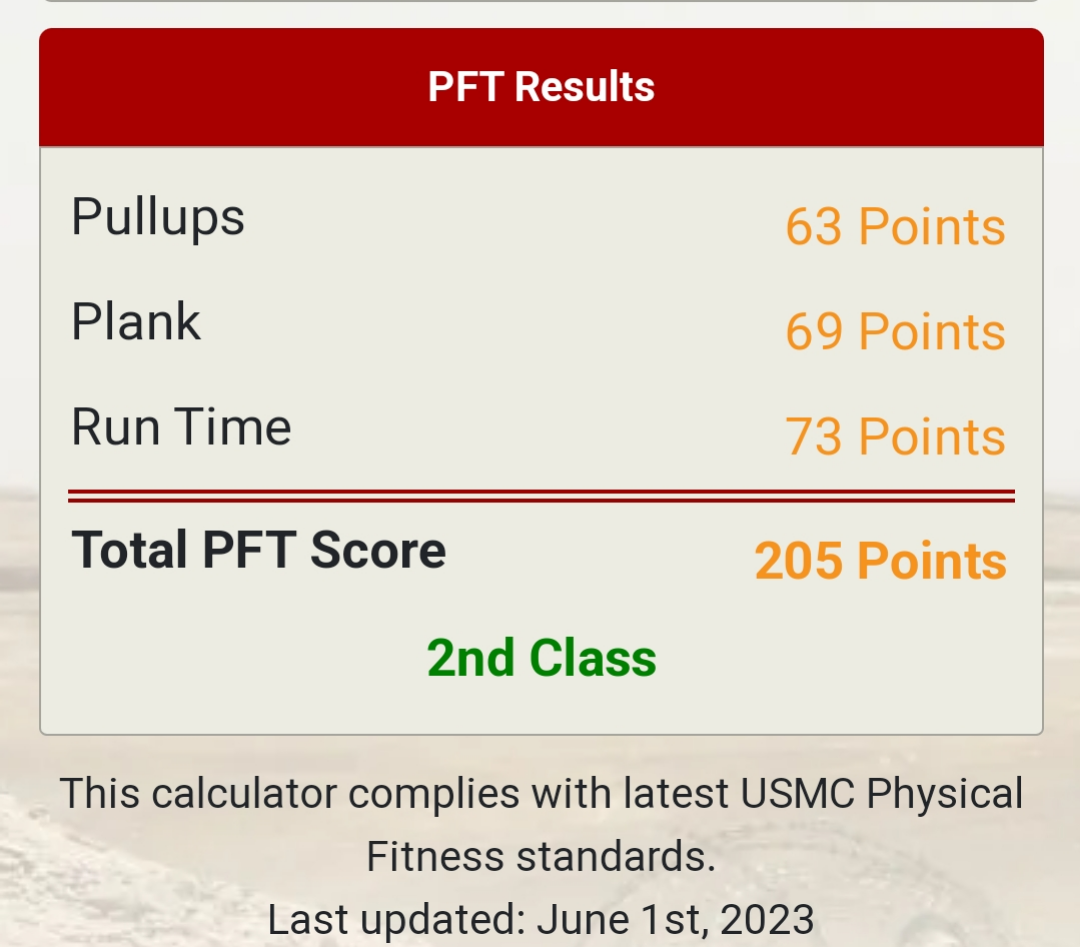
The USMC PFT Calculator is a tool designed to help Marines and recruits assess their performance on the PFT by inputting their scores from the three main exercises: the 3-mile run, pull-ups (or push-ups if applicable), and crunches.
Using a PFT calculator simplifies the process of determining your overall score and ensures accurate tracking of your physical fitness progress. It provides a quick, easy, and efficient way to calculate your scores based on the Marine Corps’ established scoring system.
By entering your performance results into the calculator, you can instantly receive your overall PFT score, which is essential for determining your eligibility for promotions, assignments, and continued service.
Components of the USMC PFT
| Exercise | Points Max | Required Standard |
| 3-Mile Run | 100 | Times vary by age and gender |
| Pull-ups/Push-ups | 100 | Minimum 3 pull-ups or push-ups |
| Crunches | 100 | Minimum 50 crunches |


What is the USMC Physical Fitness Test (PFT)?
The USMC Physical Fitness Test (PFT) is a critical fitness assessment that measures a Marine’s overall physical condition. It is used to assess the physical readiness of individuals to perform the physical demands of military service. The PFT consists of three main components: the 3-mile run, pull-ups (or push-ups for females), and crunches.
Each component evaluates different aspects of physical fitness:
- The 3-Mile Run: This tests a Marine’s cardiovascular endurance and stamina. A strong performance on the run is crucial for Marines in various combat and field situations.
- Pull-ups or Push-ups: This assesses upper body strength and endurance. Males are required to complete pull-ups, while females perform push-ups.
- Crunches: This tests core strength and endurance. A strong core is essential for overall stability and strength in combat situations.
The scores from each of these components are combined to determine your overall PFT score, which ranges from 0 to 300 points. Marines must meet the minimum standards to maintain eligibility for their positions.
Why Use a USMC PFT Calculator?
The USMC PFT Calculator is a valuable tool for Marines and recruits who want to track their physical fitness progress, evaluate their performance, and set realistic goals for improvement. Here’s why you should use it:
- Accuracy in Scoring: The calculator ensures accurate assessment by using the official Marine Corps scoring system for each component of the PFT. By entering your performance data, you receive a precise calculation of your total score.
- Progress Tracking: Marines can use the calculator to track their performance over time. This helps identify areas of strength and areas that need improvement, allowing for targeted training to achieve higher scores.
- Goal Setting: Using the calculator, you can set personal fitness goals based on your current scores. It provides a tangible metric for improvement, which is essential for achieving higher physical standards and advancing in your military career.
- Time-Saving: Instead of manually calculating scores based on various age, gender, and performance charts, the calculator streamlines the process, providing immediate results and feedback.
Understanding the USMC PFT Scoring System
The USMC PFT Scoring System is based on the performance of the three exercises: the 3-mile run, pull-ups (or push-ups), and crunches. The scoring system takes into account the time for the run, the number of pull-ups (or push-ups), and the number of crunches completed. Each exercise has a maximum score of 100 points, with the total PFT score adding up to a maximum of 300 points.
Breakdown of Scoring:
- 3-Mile Run: The time it takes to complete the run determines the points awarded. A faster time results in a higher score. The time varies depending on age and gender, with younger Marines typically required to run faster to score higher.
- Pull-ups (or Push-ups for females): Each pull-up or push-up is worth one point. The maximum points (100) are awarded based on the maximum number of pull-ups or push-ups performed.
- Crunches: Similar to the pull-ups/push-ups, each completed crunch is worth one point, and the total points are based on the number of crunches performed.
Scoring for USMC PFT Components
| Exercise | Points Max | Scoring Criteria |
| 3-Mile Run | 100 | Points based on time (fast times = more points) |
| Pull-ups/Push-ups | 100 | Points based on number completed (max = 20 pull-ups or push-ups) |
| Crunches | 100 | Points based on number completed (max = 100 crunches) |
How the USMC PFT Calculator Works
The USMC PFT Calculator works by inputting specific performance data for each component of the Physical Fitness Test. Here’s how the process works:
- Input Your Data: Enter the number of pull-ups (or push-ups if applicable), the time for the 3-mile run, and the number of crunches you completed during the test.
- Calculator Process: The calculator uses official Marine Corps scoring formulas for each exercise to convert your performance data into a score. It factors in your age, gender, and the official point ranges for each component.
- Receive Your Results: Once the calculator processes your data, it provides your total PFT score. The score will fall between 0 and 300, depending on your performance in each component.
- Evaluate Your Score: The calculator also gives you feedback on how your score compares to the minimum standards for your age and gender, helping you understand where you stand and areas for improvement.
Sample PFT Results
| Exercise | Your Score | Maximum Score |
| 3-Mile Run | 25:00 minutes | 100 |
| Pull-ups/Push-ups | 12 | 100 |
| Crunches | 75 | 100 |
| Total Score | 235 | 300 |
Key Components of the USMC PFT: Running, Push-ups, and Crunches

The USMC PFT is built around three main physical exercises, each evaluating a different aspect of physical fitness.
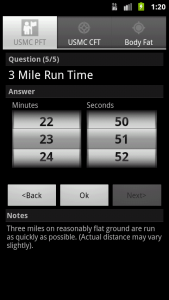
- The 3-Mile Run: Cardiovascular endurance is essential for Marines, and the 3-mile run is used to assess this. It simulates the physical demands of military tasks, requiring stamina and strength. Marines must maintain a consistent pace, and younger Marines typically have to run faster to achieve the highest score.
- Push-ups (or Pull-ups for Males): This component tests upper body strength and endurance. For males, pull-ups are required, while females complete push-ups. Marines are expected to perform as many reps as possible within the time frame. The higher the number of pull-ups or push-ups, the better the score.
- Crunches: Core strength is crucial for stability in combat scenarios. The crunches portion evaluates a Marine’s abdominal endurance, with the goal being to complete as many reps as possible within two minutes. Crunches are important for overall physical readiness.
Overview of Key USMC PFT Components
| Exercise | Purpose | Required Performance |
| 3-Mile Run | Assess cardiovascular endurance | Complete in the shortest time possible |
| Pull-ups/Push-ups | Test upper body strength and endurance | Perform maximum reps (pull-ups for males, push-ups for females) |
| Crunches | Evaluate core strength | Complete maximum crunches in 2 minutes |
How to Calculate Your USMC PFT Score
Calculating your USMC PFT score involves understanding the scoring system for each of the test components: the 3-mile run, pull-ups (or push-ups for females), and crunches. Here’s a breakdown of how each component contributes to your total score:
- 3-Mile Run: Your time for the 3-mile run is converted into points based on Marine Corps standards. The faster you complete the run, the more points you earn. The time requirements vary depending on your age and gender.
- Pull-ups or Push-ups: For males, pull-ups are required. For females, push-ups are the designated exercise. The maximum points for this exercise are given for completing the highest number of pull-ups or push-ups (20 for males, a similar range for females).
- Crunches: Crunches assess your core strength. A set amount of points is given based on the number of crunches completed, with the maximum points given for completing the maximum number of crunches within two minutes.
Example Calculation:
| Exercise | Your Performance | Max Score | Points Earned |
| 3-Mile Run | 24:30 minutes | 100 | 85 |
| Pull-ups/Push-ups | 15 | 100 | 85 |
| Crunches | 75 | 100 | 70 |
| Total Score | – | 300 | 240 |
Your total score is a sum of the points from each section. In this case, the total score is 240, which reflects a solid performance across all sections.
USMC PFT Calculator for Different Age Groups
The USMC PFT scoring system adjusts based on age and gender, recognizing that physical performance can change over time. As such, the USMC PFT calculator allows for accurate calculation based on these parameters. Here’s how it works:
- Age and Gender Factors: The Marine Corps sets different time standards for the 3-mile run based on age and gender. Younger Marines have a more stringent time requirement, while older Marines have more lenient standards.
- Scoring Adjustments: In addition to the run time, the number of pull-ups or push-ups and crunches also vary depending on age and gender. The PFT calculator factors in these differences when calculating the final score.
Age Group and Performance Example:
| Age Group | Max Time (3-Mile Run) | Pull-ups (Max for Males) | Push-ups (Max for Females) | Crunches (Max) |
| 17-26 | 18:00 minutes | 20 | 20 | 100 |
| 27-39 | 19:00 minutes | 19 | 19 | 95 |
| 40+ | 20:00 minutes | 18 | 18 | 90 |
The USMC PFT calculator automatically adjusts the performance thresholds based on these age and gender parameters, ensuring that each Marine is compared to appropriate standards.
How the USMC PFT Calculator Impacts Marine Corps Readiness
The USMC PFT Calculator plays a crucial role in maintaining the overall readiness of the Marine Corps. It serves as an essential tool for both individual Marines and the military as a whole, providing insight into the physical fitness levels of service members. Here’s how it impacts readiness:
- Individual Performance Tracking: Marines can use the calculator to regularly assess their fitness and identify areas that require improvement. Tracking progress helps Marines stay in peak physical condition, which is critical for both daily tasks and combat situations.
- Unit Readiness: At a broader level, the USMC PFT Calculator helps leaders gauge the physical readiness of their units. Regular PFT assessments ensure that the entire unit is maintaining the necessary fitness standards, which enhances overall mission success.
- Promotion and Assignment Decisions: A Marine’s PFT score can directly influence promotion and assignment opportunities. The PFT calculator ensures that Marines have a transparent and consistent way to track their scores, which ultimately impacts their career progression.
Table: Impact on Marine Corps Readiness
| Impact Area | Explanation |
| Individual Readiness | Helps Marines track their fitness and make improvements. |
| Unit Readiness | Ensures unit-wide fitness levels meet the required standards. |
| Career Progression | Affects promotions, assignments, and overall career success. |
The Importance of Meeting USMC PFT Standards
Meeting the USMC PFT standards is essential for maintaining the physical readiness required for military duties. The standards are designed to ensure Marines can perform effectively in combat situations and meet the demands of daily military life. Here’s why meeting these standards is crucial:
- Physical Health and Wellness: Regularly passing the PFT ensures that Marines maintain strong cardiovascular health, muscle endurance, and core stability, all of which are important for sustaining physical activities during operations.
- Combat Effectiveness: Marines are required to perform physically demanding tasks during combat scenarios. Being physically fit enhances stamina, agility, and strength, allowing Marines to handle the challenges of battle.
- Career Success: Marines who consistently meet or exceed PFT standards are viewed as strong candidates for promotion. It’s essential for career advancement within the Corps to meet these benchmarks.


Table: Importance of Meeting PFT Standards
| Reason | Explanation |
| Physical Health | Ensures Marines stay in top physical condition. |
| Combat Readiness | Maintains stamina and strength for mission success. |
| Career Advancement | PFT scores affect promotion eligibility and opportunities. |
Tips for Improving Your USMC PFT Performance
Improving your USMC PFT performance requires dedication, consistency, and targeted training. Here are some practical tips for excelling in each component of the test:
- Running: To improve your 3-mile run time, focus on interval training, long-distance running, and sprint intervals. These exercises build endurance and speed.
- Pull-ups/Push-ups: For upper body strength, incorporate pull-up/chin-up exercises into your routine. To increase your push-up performance, work on your upper body endurance with variations such as push-up holds and diamond push-ups.
- Crunches: Core strength is vital for crunch performance. Incorporate a variety of core exercises such as leg raises, bicycle crunches, and plank variations to increase your endurance and improve your overall crunch score.
Table: Tips for Improving PFT Components
| Component | Training Focus | Suggested Exercises |
| 3-Mile Run | Improve endurance and speed | Interval runs, long-distance running, sprints |
| Pull-ups/Push-ups | Build upper body strength and endurance | Pull-up variations, push-up sets, resistance training |
| Crunches | Strengthen core muscles | Leg raises, bicycle crunches, planks |
Common Mistakes to Avoid During the USMC PFT
When preparing for or taking the USMC PFT, there are several common mistakes that can affect your performance. Avoiding these mistakes is essential for achieving your best score:
- Not Pacing Yourself: In the 3-mile run, running too fast at the beginning can lead to exhaustion before completing the course. It’s important to pace yourself for the entire distance.
- Improper Form in Pull-ups/Push-ups: For pull-ups, using improper form, such as not reaching the full range of motion, can lower your score. The same applies to push-ups for females.
- Rushed Crunches: Crunches should be performed with controlled movement. Rushing through the exercise can lead to injury and lower your score.


Table: Common Mistakes
| Mistake | Impact on Performance |
| Pacing Too Fast | Leads to exhaustion and decreased performance in the run. |
| Poor Form in Pull-ups | Results in a lower score for pull-ups. |
| Rushed Crunches | Increases risk of injury and reduces effectiveness of exercise. |
Using the USMC PFT Calculator to Set Fitness Goals
The USMC PFT Calculator is a powerful tool for setting realistic and measurable fitness goals. By inputting your current performance and understanding where you need to improve, you can create a fitness plan that targets specific areas. Here’s how to set goals effectively:
- Identify Weak Areas: Use the calculator to track your performance in each area—run time, pull-ups/push-ups, and crunches. Focus on the component where your score is the lowest.
- Set Incremental Goals: Break down your goals into smaller, achievable steps. For example, aim to reduce your run time by 30 seconds each month or increase the number of pull-ups by 1 each week.
- Monitor Progress: Regularly input your scores into the calculator to monitor your progress. Adjust your training plan as needed based on your performance improvements.
Conclusion: Tracking Your Progress with the USMC PFT Calculator
The USMC PFT Calculator is an invaluable tool for tracking your physical fitness progress. Whether you’re a new recruit or a seasoned Marine, it provides a simple and efficient way to assess your performance on each component of the test. By regularly calculating your scores, you can stay on track with your fitness goals and ensure that you meet the Marine Corps’ rigorous standards.
Tracking your progress using the USMC PFT Calculator also enables you to identify areas where you can improve and focus your training efforts. This can ultimately enhance your overall readiness and contribute to your career success within the Marine Corps.